How Much Does a Professional Artist Website Cost?
If you've started looking into having a professional website designed for your art practice, you've probably discovered that prices can vary enormously.
You can build a website yourself for the cost of a platform subscription. You can purchase a template for a few hundred dollars. You can hire a designer for several thousand dollars. And you can invest significantly more in a fully custom website.
So what should an artist actually expect to invest?
The short answer is: it depends on what you need your website to do and how much customization, strategy, and professional expertise you need.
For artists who have established practices and are looking for a custom website that thoughtfully represents their work and career, I would expect the investment to be considerably higher than the cost of simply putting a portfolio online.
My own custom website projects currently begin at $8,500.
That number isn't intended to suggest that every artist needs to spend $8,500—or that a more expensive website is automatically a better website.
It's about understanding what you're actually paying for.
What does an artist website really cost?
There are several different levels of investment, and they solve very different problems.
DIY: The cost of doing it yourself
Platforms such as Squarespace and Wix make it possible to create a professional-looking website without hiring a designer.
Your primary costs will generally be the platform subscription and your domain name.
For an artist who is comfortable making design decisions, organizing their own work, writing their content, and learning the platform, this can be a perfectly reasonable approach.
But the financial cost isn't the only consideration.
You're also investing your time, attention, and decision-making.
And as your practice becomes more established, those may be the resources you're least interested in spending on your website.
Templates and semi-custom websites
The next level is working with an existing template and customizing it to your needs.
This can be a good middle ground. You benefit from an established structure while getting some professional help with design and implementation.
The limitation is that you're still starting with someone else's underlying decisions about layout, navigation, hierarchy, and functionality.
For some artists, that's exactly enough.
For others, particularly when the practice has become more complex or distinctive, it can feel like trying to make the work fit the website rather than the other way around.
Custom website design
A custom website begins with your practice, rather than a predetermined template.
The process can include strategy, information architecture, content organization, art direction, visual design, copy guidance or development, responsive design, SEO considerations, and technical implementation.
My custom website projects currently begin at $8,500.
The investment varies depending on the scope and complexity of the project, but the important distinction is that you're not simply paying someone to assemble pages.
You're investing in a process of figuring out how your practice should be presented online.
What are you actually paying for?
A professional website isn't just the sum of its technical components.
You're investing in things like:
Strategy
What should someone understand about your practice when they arrive at your site?
What work should they see first?
How should your different bodies of work relate to one another?
What information matters—and what doesn't need to be there?
Curation
An established artist may have years' worth of work. The challenge isn't necessarily finding enough content. It's deciding what deserves attention. A thoughtful website helps create hierarchy rather than simply displaying everything you have.
Design
Custom design allows the visual experience to be shaped around your work rather than asking your work to conform to a template.
Typography, scale, spacing, navigation, transitions, and image presentation all affect how someone experiences your practice.
Content and messaging
Your website needs more than beautiful images.
Your bio, artist statement, project descriptions, page titles, navigation labels, and other text all contribute to how your work is understood, and that varies by intended audience. Understanding WHO you are trying to reach is a cornerstone of this work.
Technical implementation
Someone has to actually build the thing, make it responsive, test it, connect the necessary tools, optimize images, configure the site, and make sure everything works.
Perspective
This one is easy to underestimate.
When you're deeply immersed in your own practice, it can be difficult to step outside it and determine what a new visitor needs to see and understand.
An experienced content strategist and designer brings an outside perspective to those decisions.
That's part of the value, too.
What can increase the cost?
Once you move beyond a straightforward portfolio site, certain things can add complexity.
For example:
a large number of bodies of work
extensive archives
e-commerce
multiple languages
complex integrations
sophisticated animations or interactions
extensive copywriting
SEO strategy
migration from an existing website
significant content organization or restructuring
custom functionality
But complexity isn't always the goal. In fact, one of the most valuable things a professional can do is determine where complexity is necessary and where it isn't.
A sophisticated website can be remarkably simple.
What about the ongoing costs?
Your initial website investment isn't the only cost to consider.
You'll generally have some ongoing expenses, such as:
Website platform/hosting: Depending on the platform you use.
Domain: Usually a relatively small annual expense.
Maintenance: This depends on your platform and whether you manage updates yourself or have someone help you.
Future updates: You may eventually want to add new functionality, redesign sections, or make larger changes as your practice evolves.
One reason I often recommend an all-in-one platform such as Squarespace for artists is that it can keep the technical side relatively straightforward. Your hosting, security, and core website infrastructure are managed within one system rather than requiring you to manage multiple services.
The right platform isn't necessarily the one with the most features.
It's the one that makes sense for how you actually need to work.
Is an $8,500 website worth it?
This is ultimately the more useful question.
If you're comparing an $8,500 custom website with a $300 template, the custom website will obviously look expensive.
But they're not necessarily the same product.
A better comparison is:
What problem am I trying to solve?
If you simply need somewhere to upload your artwork, a DIY site may be completely sufficient.
But if your career has evolved and you're looking for an online presence that:
accurately represents your current practice
presents your work with intention
communicates your professional experience
makes it easy for the right people to understand your work
feels distinctive rather than generic
and gives you confidence when you share your URL
then you're solving a very different problem.
At that point, the website isn't simply a technical necessity.
It's part of your professional presentation.
You don't necessarily need a custom website
I think this is important to say explicitly.
I don't believe every artist needs a custom website.
There are excellent templates and DIY platforms available, and they can be the right choice depending on where you are in your career, how much time you have, and what you need your website to accomplish.
But there is a point where the question changes.
It's no longer:
“Can I build a website?”
It's:
“Is building this website myself the best use of my time—and will I be able to create the experience my practice now requires?”
For some artists, the answer will still be yes.
For others, bringing in an experienced designer is the more valuable investment.
Your website is part of your professional presence
If you've been building your art career for years, you've already invested significantly in your practice.
You've invested in materials, studio space, education, exhibitions, documentation, travel, professional relationships, and—most importantly—your time.
Your website doesn't need to be the most expensive thing you invest in.
But it should be proportionate to the role you expect it to play.
If it's simply a place to store images, you probably don't need a $8,500 website.
If it's the primary place where curators, galleries, collectors, writers, and potential collaborators encounter your practice, the calculation may look very different.
The goal isn't to spend more.
It's to invest appropriately for where you are now.
And if your career has evolved significantly since you first built your website, that may be the most important question to ask:
Does your current website reflect the level of your practice—or are you still presenting yourself with the tools and thinking that made sense several years ago?
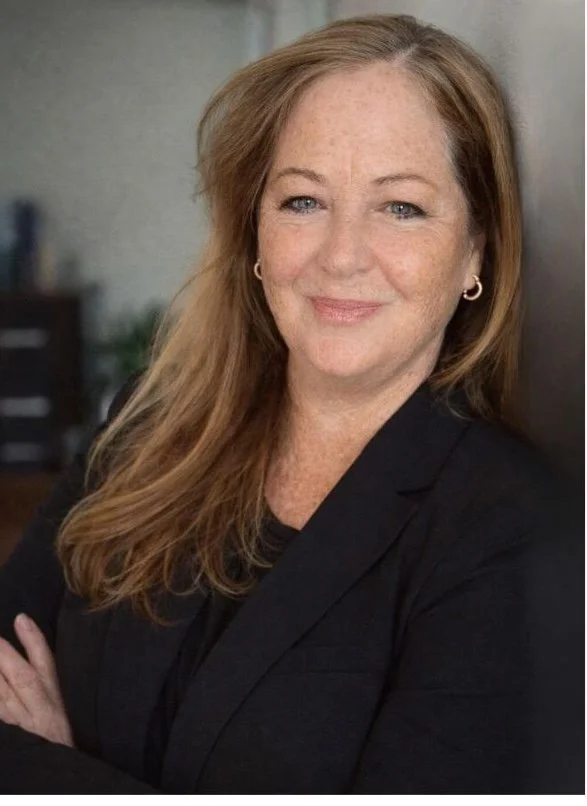
Dr. Elizabeth MacLean
A note about my own services
If you're considering a custom website, I work with visual artists who are ready for an online presence that reflects the quality, depth, and evolution of their practice. My approach combines strategy, design, and a deep respect for the work itself.
If you're curious about whether a custom website makes sense for where you are in your career, you're welcome to get in touch.